Flowstate
Flowstate is a habit-tracking mobile app that adapts to users’ changing routines and motivations, encouraging progress through flexibility. The goal is to help individuals working towards both short/long goals recognize the cost of skipping, before small lapses turn into long-term drift.
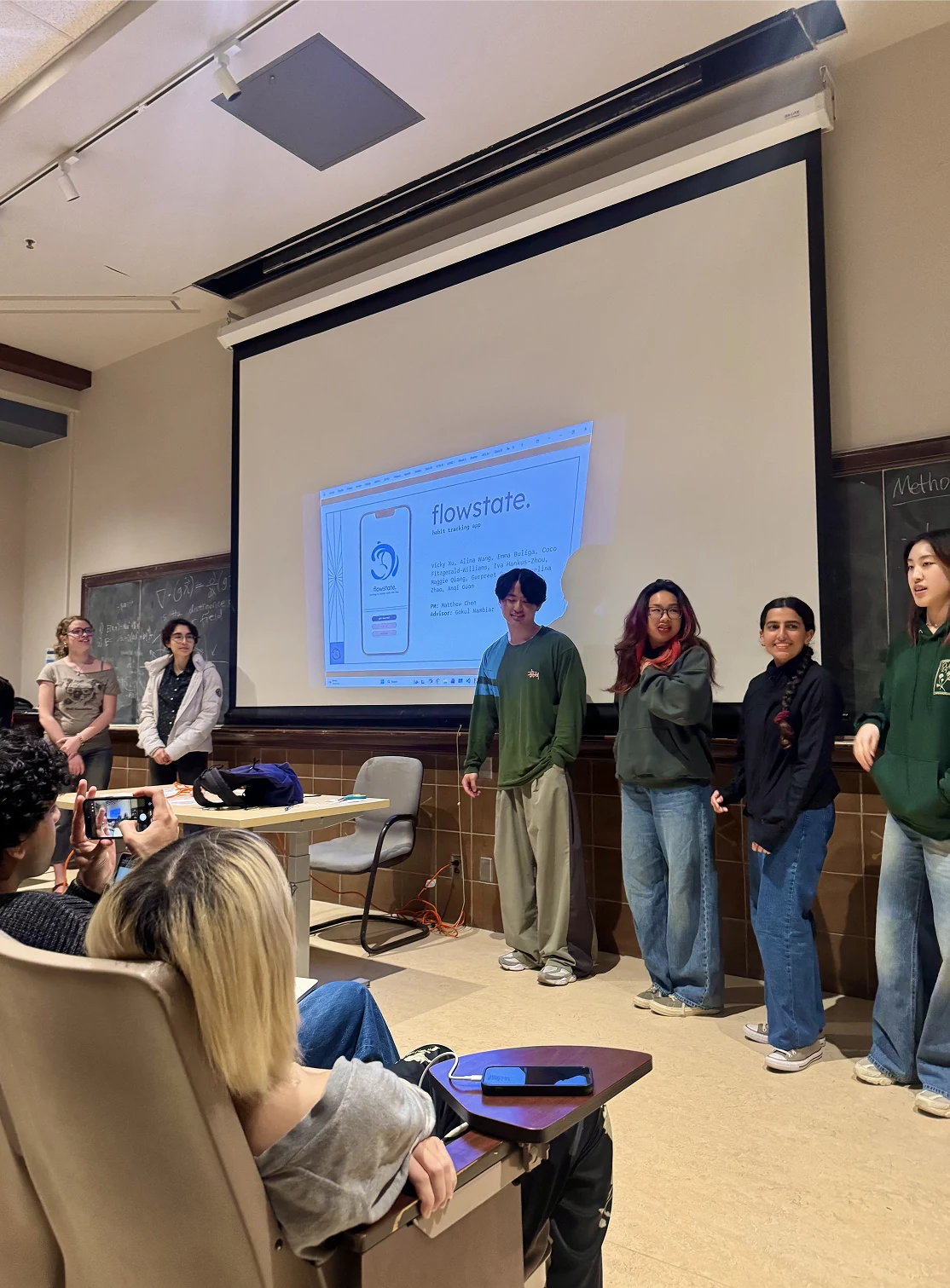
As Project Manager and lead designer, I coordinated a team of seven designers across a nine-week sprint. I worked on the game jam feature from initial wireframes to high-fidelity screens and led the design of the home page and task management flows.
Leading as PMThe Hard Part Wasn’t Figma
Flowstate was my first real design project, and I did two jobs at once: Project Manager for a team of seven designers, and designer of the game jam feature and home page.
- Keeping the team aligned: I ran regular check-ins on scope and timeline, switching between reviewing my own screens and everyone else’s in the same meeting.
- Resolving a split: partway through, the team divided on the app’s visual and product direction. I made the call, realigned everyone around one direction, and reprioritized so the disagreement didn’t eat into our remaining time.
- What I learned: less about Figma, more about process: how much structure a team of seven needs, how to make a decision people can move forward with even when not everyone agrees, and how to keep design moving while managing the people doing it.
The ProblemWhen Habit Apps Backfire
Habit apps are making procrastination worse, not better.
Individuals often fall into cycles of procrastination due to decision fatigue and lack of organization. The rigid structures of traditional habit-tracking apps increase guilt rather than inspire progress, turning small lapses into long-term abandonment.
How Might We
How might we create an accountability app that helps individuals working toward personal goals recognize the cost of skipping, before small lapses turn into long-term drift?
Pain PointsWhy Existing Apps Fall Short
Our research uncovered a central, recurring theme: users felt more punished than motivated by the apps meant to help them.
Without real consequences or meaningful rewards, small lapses quickly turned into long-term drift. The core issues we identified were:
Hollow Rewards
Apps gave out rewards too freely, creating no real incentive to stay consistent, making it easy to ignore progress entirely.
No Real Consequences
Without meaningful stakes, users felt no real cost to skipping tasks, allowing small lapses to turn into long-term drift.
ResearchRewards Felt Hollow
Users are largely dissatisfied with existing productivity apps, citing hollow rewards, poor onboarding, and a lack of real consequences. Most struggle with motivation and prefer clean, focused interfaces. When it comes to social features, collaborative and encouraging dynamics win out over pure competition, though many users want the flexibility to switch between both.
69%
of users feel that productivity apps lack “real” consequences
46%
of users feel that productivity apps give out rewards too freely
46%
of users are unsatisfied with the organization and set up process of these apps
~70%
of users lack the motivation to stay on task, suffer from procrastination, and struggle with doom scrolling
74%
prefer a clean and professional interface over a gamified and colorful one
79%
of users feel productive when they’re alone
Competitive AnalysisNo App Checks Every Box
No single competitor checks every box:
- Habitica and Forest cover social and meaningful features but fall short on setup and UI simplicity.
- Pomofocus and Focus Friend are minimal but lack social depth.
- Flowstate is the only one that hits all five: meaningful results, collaborative and competitive social features, easy onboarding, and a clean interface.
The SolutionAccountability, On Your Terms
Accountability + Customization
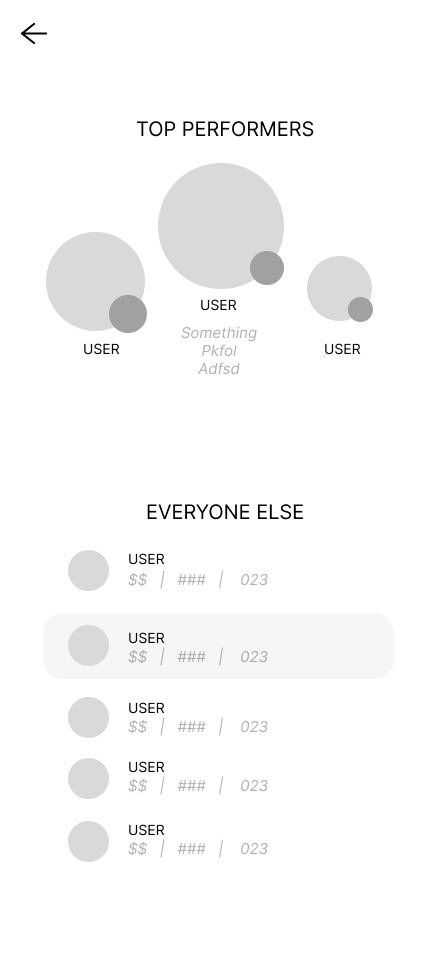
Co-working sessions allow individuals to connect with others with similar goals while also implementing a reward system via a leaderboard. Customizable notifications and widgets adapt to individual routines.
Competitive & Collaborative Social Features + a Simple Intuitive UI
Some users work best alone, so they can work on their own terms. For those who enjoy company, we built in both dynamics: a leaderboard for friendly competition, and shared stats that reward hitting goals together.
IdeationMake Competition Easy to Find
I owned two parts of the app:
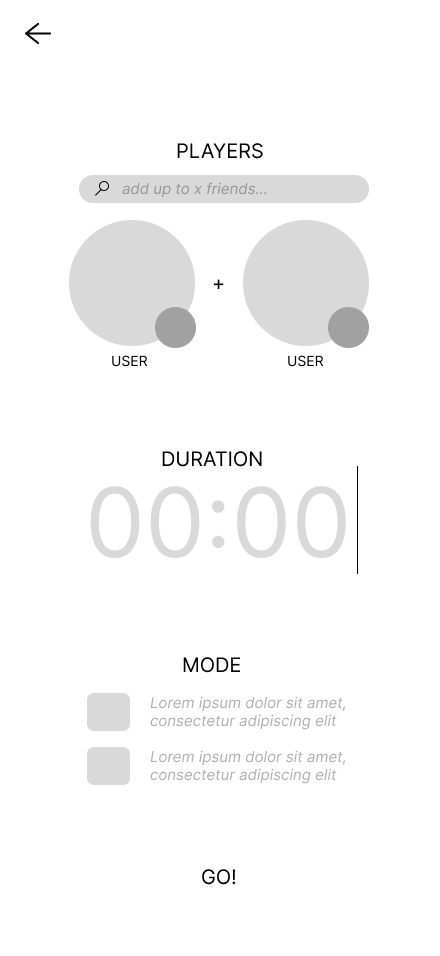
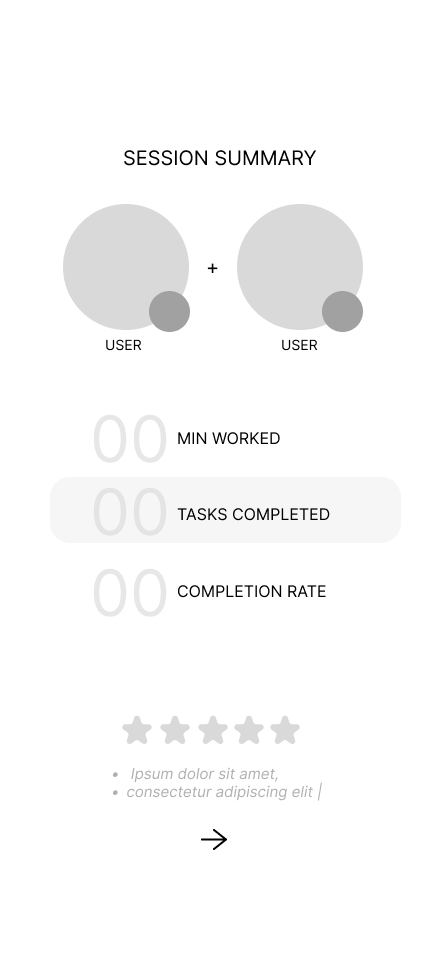
- Game jams: make it easy to find people to compete against, with a UI simple enough not to distract.
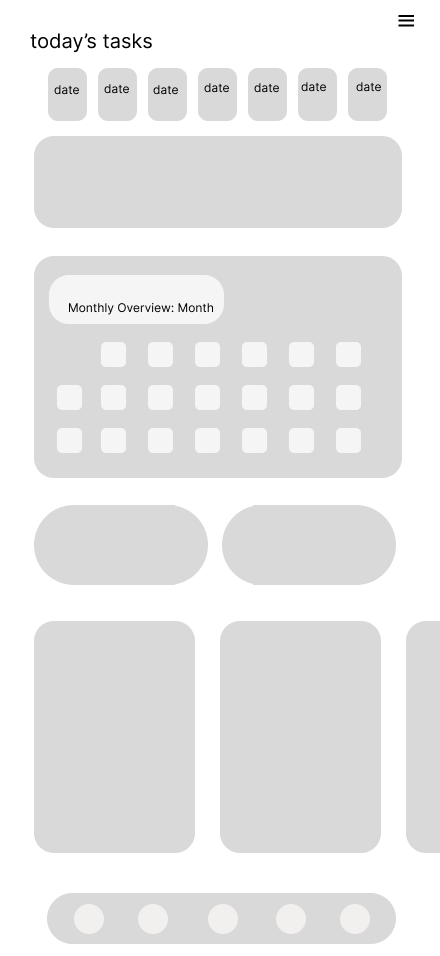
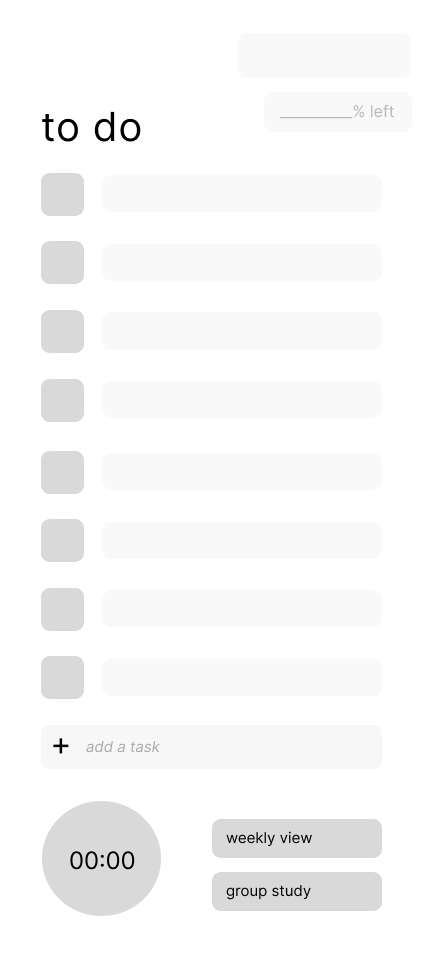
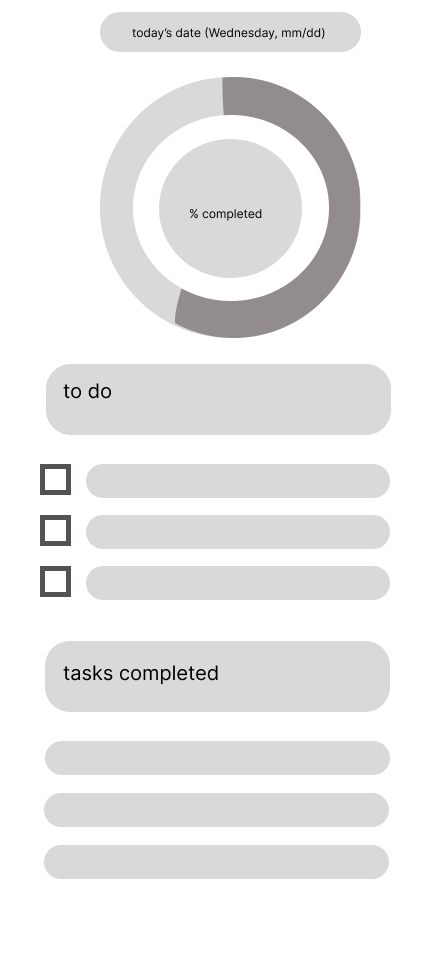
- Home page: keep it minimal, so tasks, adding friends, and starting a jam are all easy to find.
Lo-Fi WireframesJams and a Simple Home
Game Jams
Home & Tasks
Final DesignsFlexible by Design
Home & Task Log
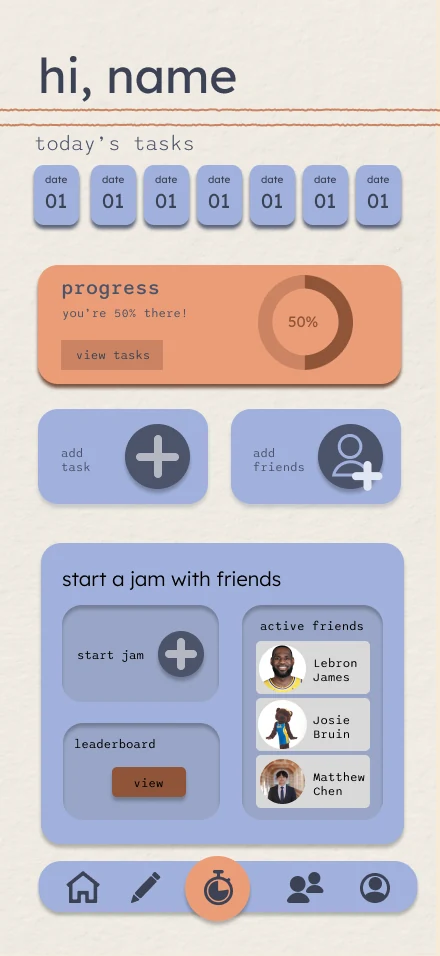
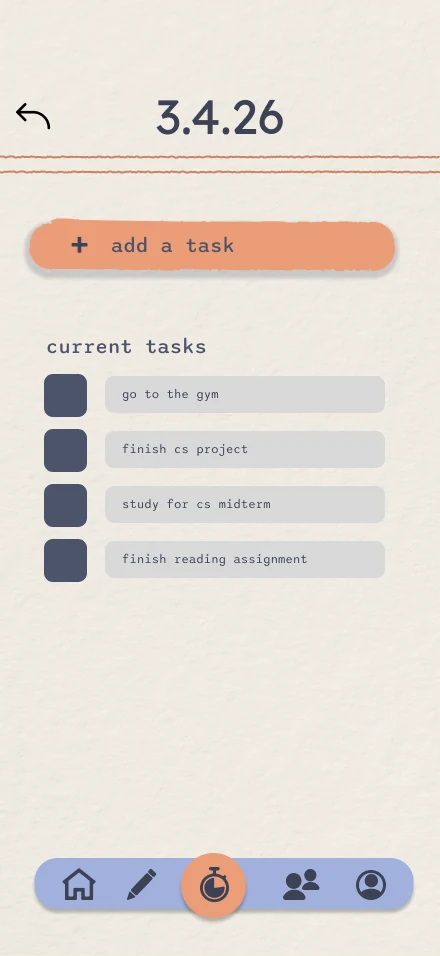
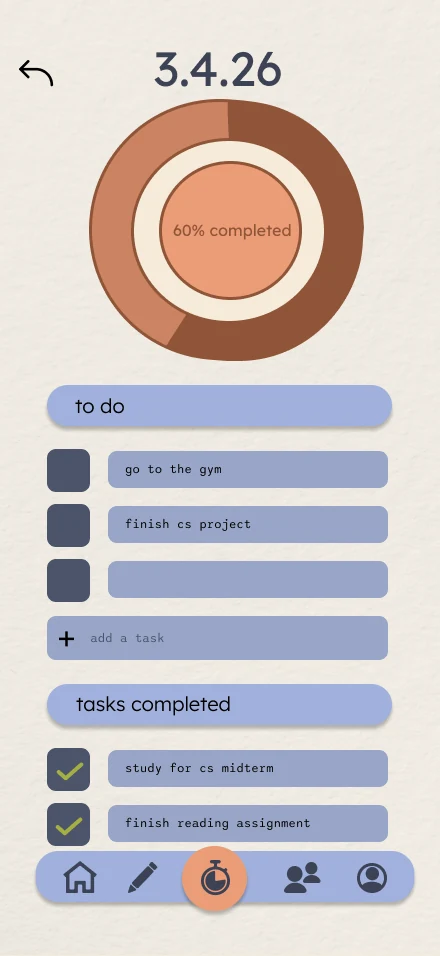
Game Jams
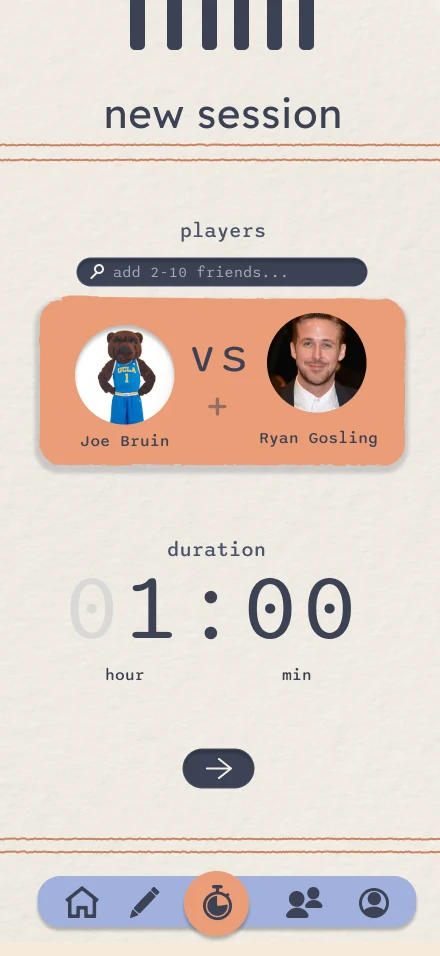
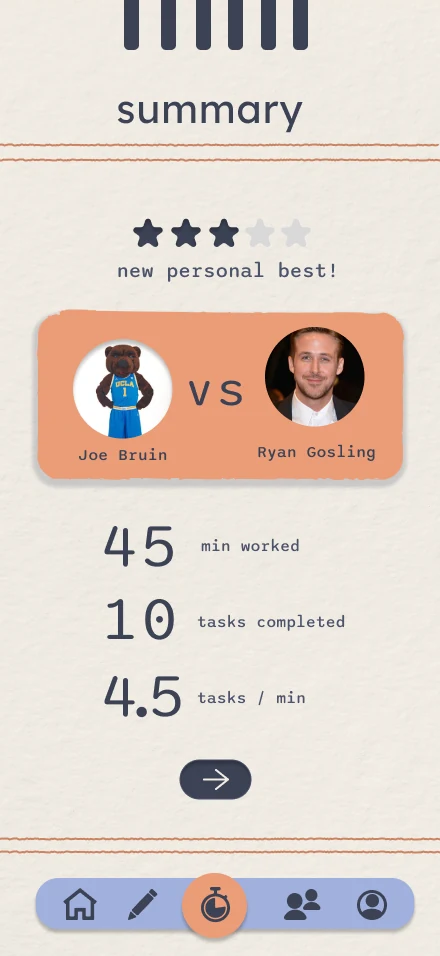
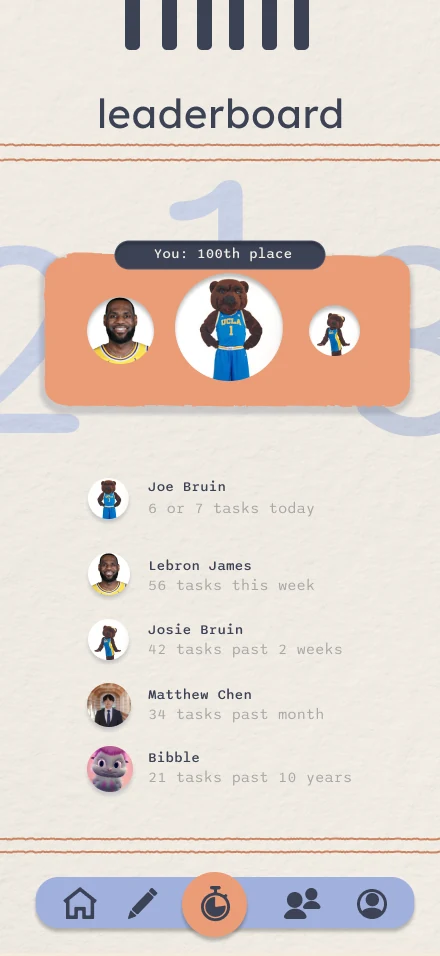
Game Jams
- Take the leaderboard’s friendly competition further
- You and your friends race to hit a shared goal
Widgets & Notifications
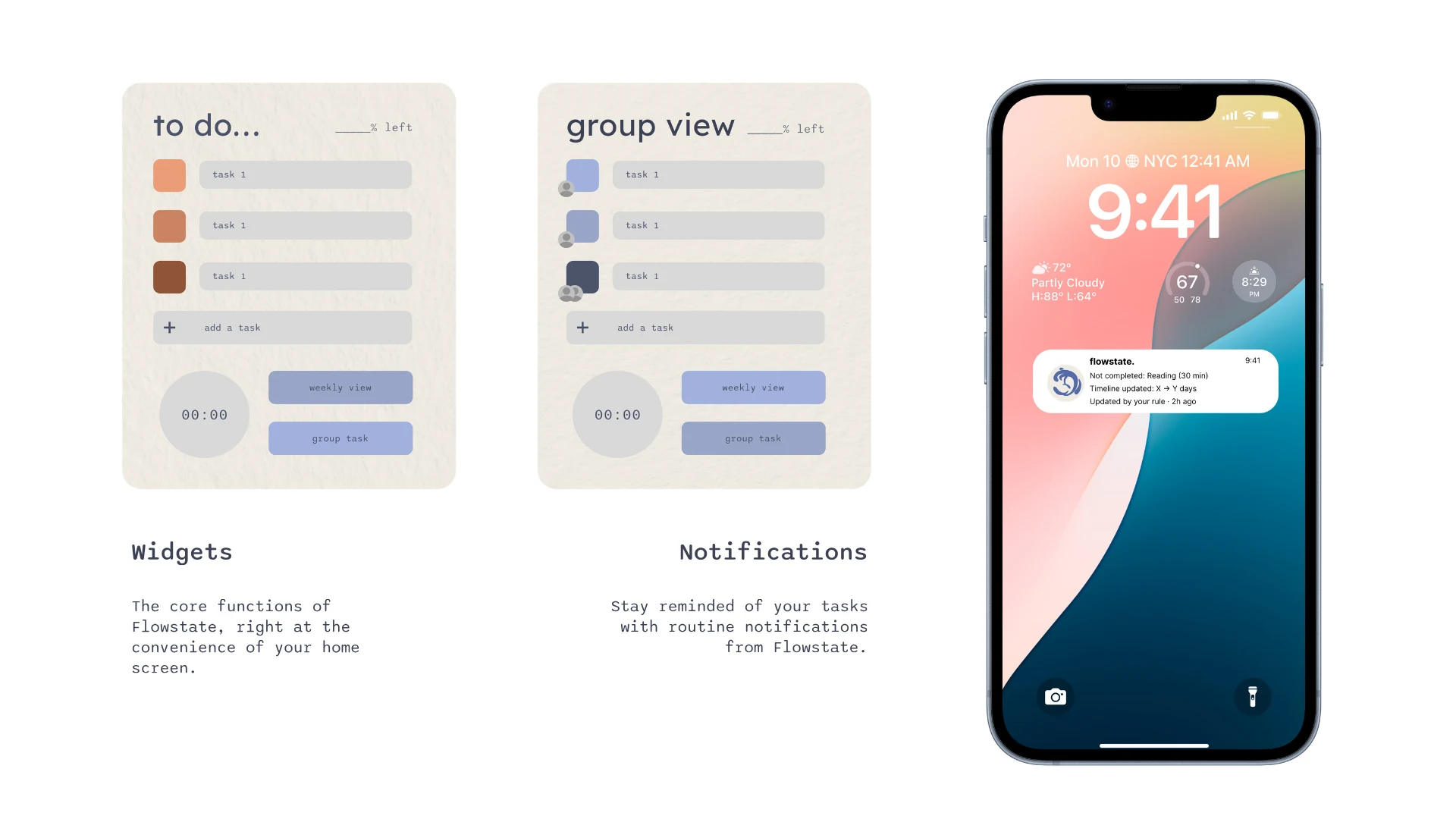
Widgets
- Shape your home screen around the habits that matter to you
Notifications
- Keep momentum going without becoming one more thing demanding attention
TakeawaysLessons From Leading a Sprint
Leading a Team Across a Full Sprint
Managing seven designers across nine weeks taught me how to balance creative direction with project ownership. Clear communication and structured check-ins kept us aligned and moving without slowing the work down.
Designing for Flexibility, Not Control
The biggest lesson from Flowstate was that good habit design doesn’t punish; it adapts. Building for flexibility over rigidity shaped every decision, from how notifications behave to how the game jam flow was structured.
Owning a Feature End-to-End
Taking the game jam from early sketches to high-fidelity screens gave me a complete view of the design process. Every decision had to be intentional, grounded in research, and ready to hold up against real user needs.
ConclusionFurther Than We Pictured
After nine weeks, we went beyond our expectations of what Flowstate would look like from our first meeting. Although we didn’t get as far as I would’ve liked with prototyping and refining, I am very satisfied with how the project turned out.
As a first project for many of us, I’m proud of what we built, and it taught me as much about leading a team through ambiguity as about designing the product. Being part of ACM Design’s first Project Tracks was unforgettable, and I’m grateful for the wonderful group I got to work with.